
Announcing Hermetic Modular: Open Source Eurorack
announcement · alchemy-lab · alchemy-sdk · open-source-eurorack
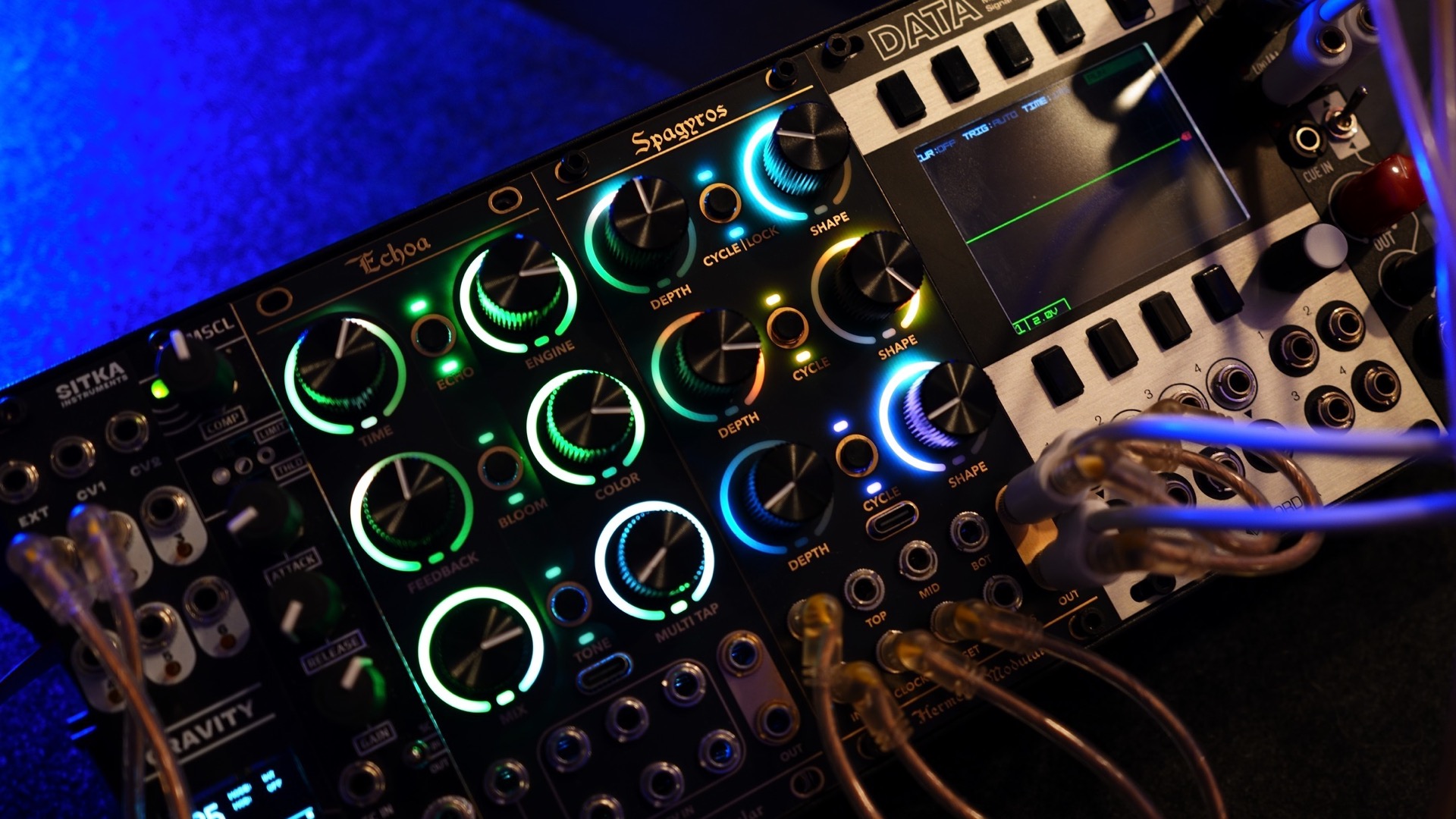
Hermetic Modular is a new Eurorack synthesizer company in Seattle, and it launches with an open source take on hardware, rather than a single module. The launch consists of Alchemy Lab, a field-programmable 12 HP hardware platform; two instruments that run on it, Echoa and Spagyros; and the Alchemy SDK, an MIT-licensed, open source firmware framework built on the Electrosmith Daisy ecosystem. This press release is the formal announcement. It explains what the company is trying to do, how the platform works, what the two launch firmwares are, and what open source means for developers who want to build their own instruments on the same hardware.
Hermetic Modular
There was a time when there was no line between science, art, and alchemy. Charting the stars, grinding pigments, and studying mathematics were different tools for the same pursuit, which the alchemists called the Great Work. Synthesis still has that character. Patching a modular system is engineering and composition at once. It makes no sense to ask when one begins and the other ends.
Hermetic Modular is built around that idea. The company makes performance instruments for the modular community, and it publishes the tools it used to build them so that anyone can continue the Great Work.
I make hardware to support the modules - the firmware and DSP - I want to perform with. By making the hardware abstractions open source and making it easy to work with via an extensive SDK, I empower others to build their own instruments. And even better: they'll probably make something better than anything I've designed!
Hermetic Modular is a project of Luke Pendergrass, based in Seattle. The company's full background is on the about page.
Flexible and expressive open hardware
Alchemy Lab is the only product of the launch: a 12 HP, skiff-friendly Eurorack module. The concept is straightforward: the hardware is a fixed, capable control surface and audio engine, and each instrument is a firmware release that runs on it. Flashing a new firmware takes a few minutes over the front-facing USB-C port, directly from the browser, with no toolchain installation and no disassembly or even need to pull the module out of the rack.
The hardware itself is built for that flexibility. It runs an STM32H750 at 480 MHz, the same ARM Cortex-M7 processor found across the Daisy ecosystem (the Alchemy Lab uses the Daisy Seed 2 DFM) with 64 MB of SDRAM and 16 MB of QSPI flash behind it. Audio runs up to 96 kHz at 24 bits in stereo. The control surface offers six potentiometers with aluminum knobs, three tactile buttons, and 102 individually addressable RGB LEDs, most of them arranged in rings around the pots so an instrument can show modulation, parameter state, and paging at a glance.
The most unusual feature sits behind the jacks. Six of the CV jacks are field-programmable: a dedicated analog circuit lets firmware reconfigure each one between CV input and CV output in real time, literally changing the electrical circuit. A delay firmware can expose clock and modulation inputs; a function generator running on the same hardware and can turn those jacks into outputs. The routing belongs to the instrument, not to the panel. Even better, jacks can be switched without a firmware redeploy or a reboot.
Every Alchemy Lab release also shares a common set of behaviors: parameter lock on every pot, motion recording, preset management with web backups, and quick firmware flashes from the program page. More information about the distinction between the board support package and the framework SDK below.
Echoa: A Stereo Dual-Delay

Echoa is the first launch instrument: a stereo dual-delay with reverb you can construct from first principles. It runs four delay lines in total, two per stereo channel, with delay times from 1 millisecond to 16 seconds and feedback that ranges from 0 to 110 percent for controlled self-oscillation. The four lines can be routed in series, in parallel, in isolated mono pairs, or spectrally, where the input signal is routed by frequency content.
That spectral routing is the reason Echoa can morph continuously from a clean digital delay into smeared, textured reflections and dense reverb. Rather than switching between a delay algorithm and a reverb algorithm, the instrument lets you build the reverb from first principles out of its delay lines and shape it while it runs. Character engines allow creative degradation of the feedback buffer, every pot supports parameter lock, motion recording captures up to four seconds of knob movement as looping modulation, and sixteen preset slots store finished sound design for easy recall during a performance. Clock can come from tap tempo or an external 24 PPQN source locked to a musical division.
A full walkthrough, the manual, and audio demos are on the Echoa product page.
Spagyros: A Performance FX Chain
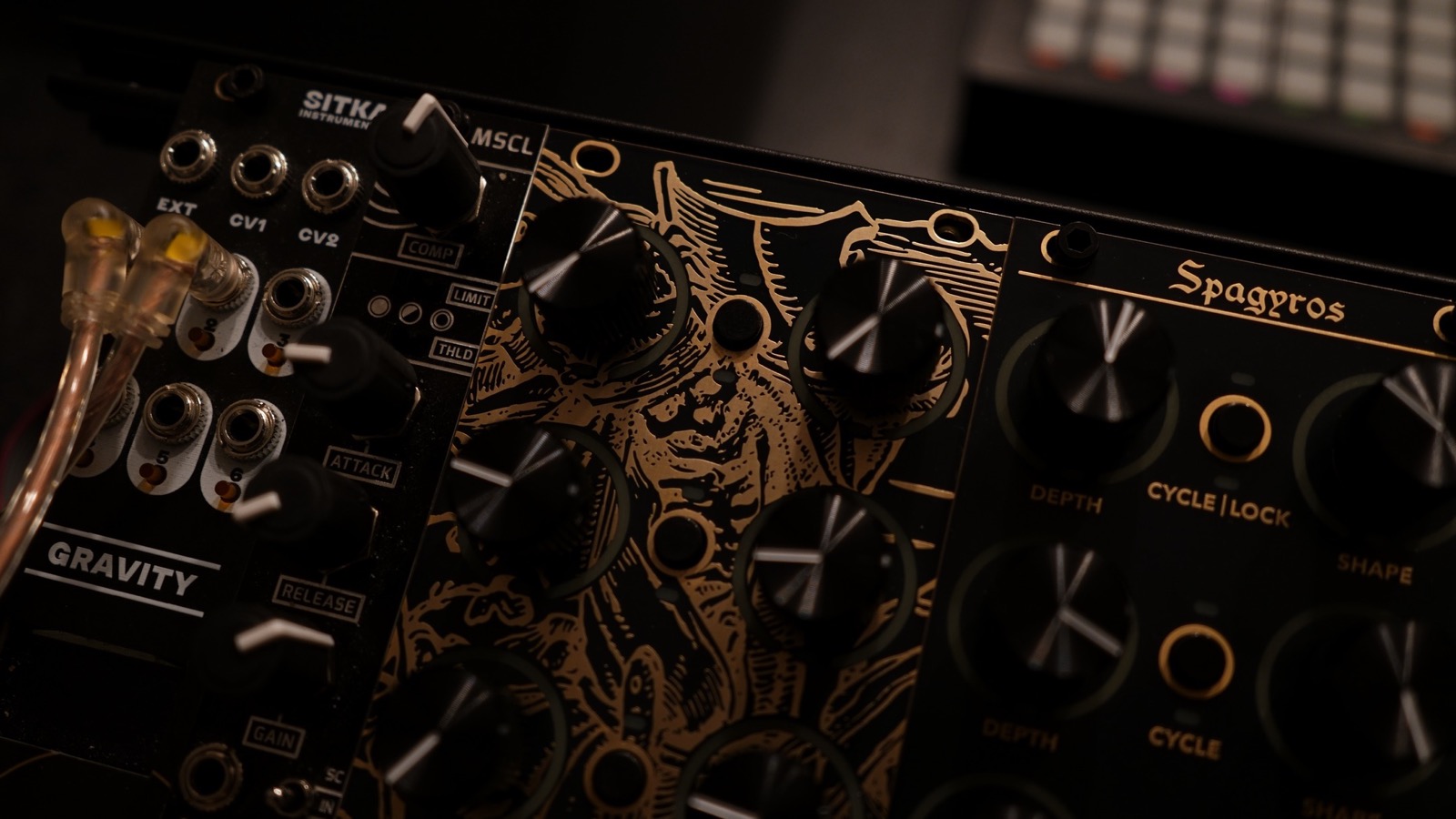
Spagyros is the second launch instrument: an end-of-chain effects processor built for performance. It offers nine effects organized into three groups. Up to three of them can be engaged simultaneously in a fixed top-to-mid-to-bottom series chain. The destruction family covers a classic DJ filter, morphing bit crush and saturation, and a riser. The rhythm family covers clock-synced beat repeat, parameter-controlled gating that moves from chopped pumping to erratic stutter, and a reverse-and-slow time machine that records into a 32 MB stereo ring buffer, so the playback head can be dragged backwards, braked to a vinyl stop, or raced ahead at catch-up speed. The final group includes a resonant phaser, delay, and reverb.
External 24PPQN clock drives the rhythmic effects, and all six CV inputs are available for external modulation. The intended use is transitions, builds, drops, and controlled destruction of a groove, layered for diverse interest beyond the static "one effect" dj-style FX units.
Demos and the complete effect list are on the Spagyros product page.
The Alchemy SDK: Open Source Eurorack Development
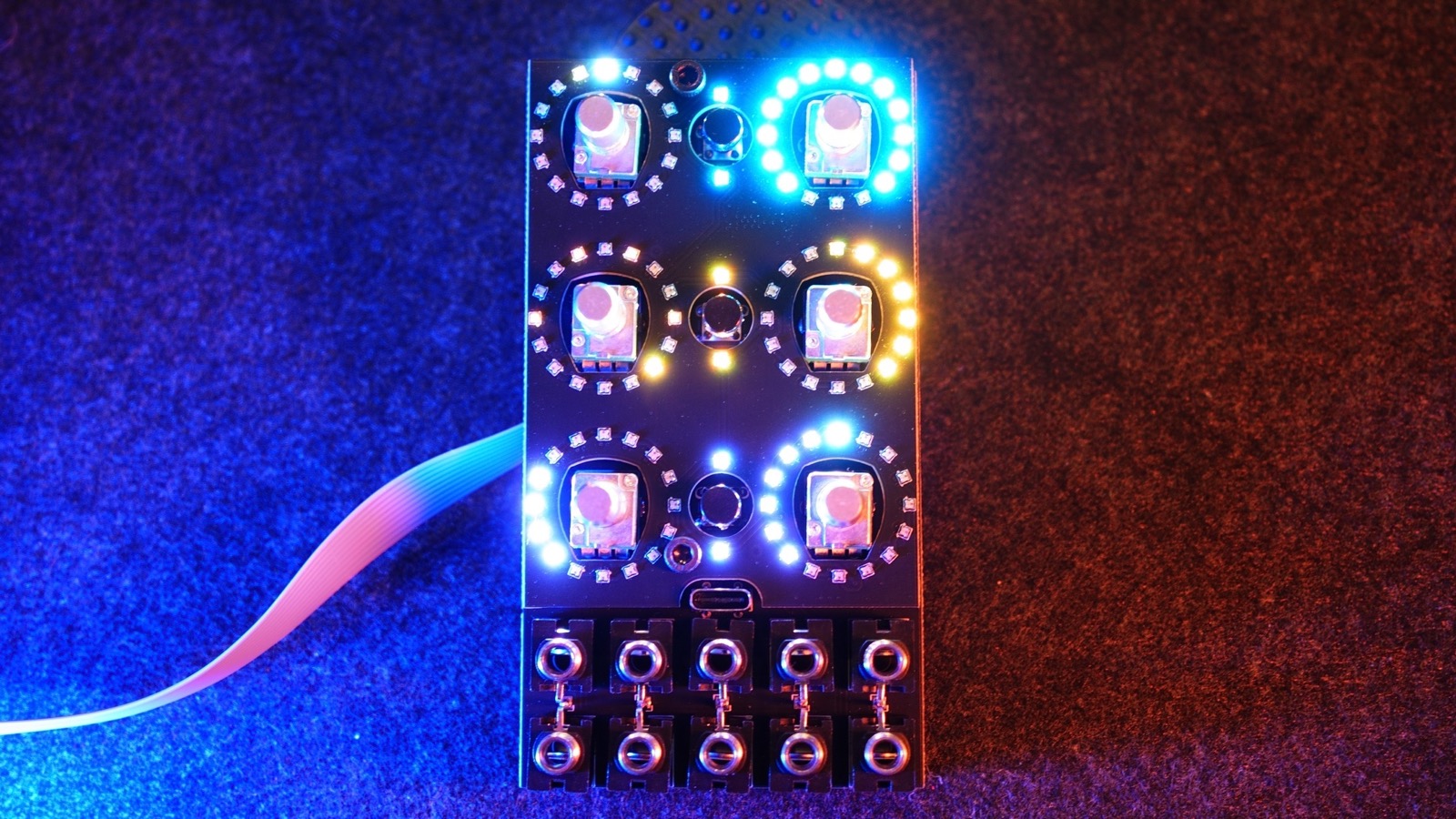
The third piece of the launch is aimed at developers. The Alchemy SDK is the firmware framework that Echoa and Spagyros are built on, and it is published under the MIT license at github.com/hermetic-modular. This is the same hardware abstraction layer the first-party Hermetic Modular instruments use.
The SDK is written in C++ on top of Electrosmith's libDaisy, so developers who already work in the Daisy ecosystem will find familiar APIs extended with Alchemy Lab board support and a richer user experience layer. That UX layer is what makes bringing your own DSP to the board easy: LED ring animations, control pagination, parameter lock, pot catch behavior, wear-leveled preset storage, a declarative CV routing matrix, and a clock PLL. In practice: bring your DSP; the platform handles the hardware UX.
Hardware drives are also exposed at a low level, meaning every advanced feature is opt-in only, for the real hackers out there.
The openness extends past firmware into everything that would be helpful for designing a full instrument. Hermetic Modular publishes front panel design and manufacturing templates. The SDK is currently in beta, and the API and preset format may still change before version 1.0. Developers who want to start building should begin at the open source page, which links the repository, the documentation, and the toolchain setup.
Availability
Alchemy Lab is available now, shipping from Seattle. The launch product is the Alchemy Lab Early Bundle: the field-programmable module with two reversible front panels, Echoa and Spagyros each have a reversable full art back. Orders are open on the Alchemy Lab buy page, and dealers are listed on the retailers page. Press resources, including photography, logos, and video, can be found on the press page.
FAQ
What is Hermetic Modular?
Hermetic Modular is a Eurorack synthesizer company in Seattle, founded by Luke Pendergrass. It builds field-programmable performance instruments on the Alchemy Lab platform and publishes its firmware framework, the Alchemy SDK, as open source.
Do Echoa and Spagyros require separate hardware?
No. Both instruments run on the same Alchemy Lab module. The Early Bundle includes reversible panels for both, and switching instruments is a firmware flash from the browser that takes a few minutes.
Is Alchemy Lab really open source?
The firmware layer is. The Alchemy SDK is MIT-licensed, built on libDaisy, and it is the same hardware abstraction layer Hermetic Modular uses for its own releases. Panel design and manufacturing templates are published alongside it.
Can I develop my own instrument for Alchemy Lab?
Yes. The SDK targets the STM32-based Daisy ecosystem with C++, CMake, and DFU flashing over USB, and it ships UX primitives such as LED animations, parameter lock, and preset storage so custom firmware feels like a finished product. Start at the open source page or the GitHub repository.